
Losing the Plot
On the Semiquincentennial and getting our stories straight


As we approach the 250th anniversary of American Independence, my social media feed is filled with either exaltations of our nation’s exceptionalism or lamentations of its failures. Officials in Washington are scrambling to fix the murky waters of the Lincoln Memorial Reflecting Pool and small towns across America are prepping their fireworks for the grand display.
Meanwhile, I’m just happy for any excuse to immerse myself in the past. I love a historic holiday and a celebratory milestone. If you need me, I’ll be over here reading Common Sense, eating traditional Hasty Pudding, and sipping a Rattle Skull.
When I look back on our nation’s history, I’m filled with awe. I think it’s pretty fascinating that a group of colonial rebels envisioned a form of government unlike any the world had ever known, and they convinced their countrymen - a diverse and widespread collection of rag-tag farmers, frontiersmen, and tradesmen - to take up arms and fight to make it real. I’m thankful they did so. I’m thankful to live here.
And I think it is a sobering glimpse into human nature that these men - who so esteemed liberty - thought that freedom shouldn’t be extended to the men and women whose bodies they enslaved and labor they exploited, nor to the communities of native tribes who had been stewarding the land of this so-called “new world” for generations.
Much ink has been spilled about whether or not America is a Christian nation founded on Christian values. I tend to agree with Thomas Kidd’s assessment -that biblical principles informed many aspects of the framing of our government (i.e. the doctrine of common creation of all humanity; fallen sinful nature necessitating checks and balances, etc.) But I’m realistic about the fact that America has, from the start, very often failed to live up to its ideals.
Being confronted by America’s failures doesn’t shock or mortify me. The founding fathers aren’t mythological heroes to me, nor does the story of America feel like a personal origin story. It is simply one of many stories that interact with my present life, making me who I am and making my community what it is.
Speaking of stories…

My church here in Boone is working our way through 1 Peter, and a few weeks ago, my friend Ethan Hardin preached on 1 Peter 2:11-12 (you can listen to the whole sermon here). The text reads as follows:
“Dear friends, I urge you, as foreigners and exiles, to abstain from sinful desires, which wage war against your soul. Live such good lives among the pagans that, though they accuse you of doing wrong, they may see your good deeds and glorify God on the day he visits us.”
Ethan noted that the apostle Peter is calling to mind a specific story for these new believers who are living in a pagan, Roman society. The story is, of course, Israel’s exile in Babylon - another pagan land that was filled with suffering and longing for their home in the promised land. But God gives his people some unexpected instructions during their time in exile:
“This is what the Lord Almighty, the God of Israel, says to all those I carried into exile from Jerusalem to Babylon: ‘Build houses and settle down; plant gardens and eat what they produce. Marry and have sons and daughters; find wives for your sons and give your daughters in marriage, so that they too may have sons and daughters. Increase in number there; do not decrease. Also, seek the peace and prosperity of the city to which I have carried you into exile. Pray to the Lord for it, because if it prospers, you too will prosper’…This is what the Lord says: ‘When seventy years are completed for Babylon, I will come to you and fulfill my good promise to bring you back to this place. For I know the plans I have for you,’ declares the Lord, ‘plans to prosper you and not to harm you, plans to give you hope and a future.’” (Jeremiah 29:4-7, 10-11)
Generations later, Peter wants these new believers in a hostile land to orient their lives around this story, anchor themselves in its themes and meanings. Ethan explained the importance of a foundational story, noting it is from story that we derive ethics and determine what our behaviors should be.
He gave the example of a James Bond film. If you find yourself in a fancy tux, sipping martinis (shaken, not stirred) and taking orders from MI6, you know to expect villains, shootouts, and high-speed chases. You know you are a spy on an important mission, because the story has determined the ethic and the actions you are to take.
Likewise, if you are a hobbit carrying a mysterious ring across a dangerous landscape, helped along by some elves and wizards and dwarves, you know what you need to do: get that ring to Mordor and destroy it. The story determines the ethic and the mission with which you are to be preoccupied.
Ethan thinks what Peter is getting at in this passage is that followers of Christ who are part of an unseen, “already, but not yet” kingdom should anchor themselves in Israel’s story of exile and return. They should let that story determine their ethic, their way of being in the world. They are to settle down and invest in the good of their communities, all the while remembering that in the future, a better and more just kingdom is coming in all its fullness. Yes, plant gardens in the now, but send down your roots into the soil of the hoped-for future to come.
Throughout our lives, we are presented with all sorts of stories. Some are more compelling than others, and for the Christian, these stories often compete with the story of the Gospel for our hearts, our attention, and our allegiances.
The American story is one such story. It is compelling. It is meaningful. It situates our lives within geographic and historic context, unifies us with our fellow citizens. But for the Christian, it is not the main story. Thus, it does not determine our ethic or how we should show up in the world. Only the Gospel can do that.
I don’t read a lot of fiction. But I’ve watched enough great TV to know that every legendary story has a main plot and a bunch of interesting subplots. Take, for example, The Office. Michael Scott’s search for meaning and belonging within his ordinary place of employment is the main plot of that series, its driving force. Yes, there are a bunch of fun subplots (Dwight’s beet farm, Angela’s cats, Pam’s artistic endeavors) that make the show more interesting and serve the larger narrative. But those stories could be written out, and the show would still go on, for they aren’t the driving force behind the narrative. Without Michael’s earnest and fumbling efforts to find belonging, the show has no anchor, no primary purpose (hot take: this is why IMO the show was never the same once he left in season seven).
I know a lot of Christians who live as if the American story is their primary plotline. If America ceases to be (in their mind) a “Christian nation,” catastrophe will ensue, so we must be preoccupied with empowering those who share our faith (or at least claim to). These believers compromise all other principles in service of this outcome, throwing their weight behind “strongman” politicians who they think will achieve their aims. They want to feel safe, knowing their faith is mainstream and they will not be persecuted. They long for the “good old days,” an imaginary time when every American citizen embodied Christian virtues. So enamored are they with our nation’s sanitized origin story that their love for country rivals their love for Christ himself.
Likewise, some people are so animated by their disdain for this country that vendetta becomes their driving narrative. Their activism becomes not just an expression of their faith, but a new form of faith, one that insists our ultimate hope is in a government that embodies their ideas of justice in the here and now.
These kinds of stories get mapped over every experience, every news story, every current event: left vs right, oppressor vs oppressed, Democrat vs Republican, rich versus poor. These are noteworthy stories describing very real and very consequential societal structures. But for the Christian, they are not the plot line we are primarily meant to orient around. We are to view the world primarily through the lens of the Gospel story: all are beloved, all have sinned, all are extended unfathomable grace from a loving God. That’s the story that determines our ethic, tells us how we are to see the world and show up in it.
After all, it is Christ who so often upsets common plotlines, loving both the sinner and the saint, serving both the rich and the poor, setting captives free and then turning around and liberating the captor as well.
I don’t want to minimize people’s desire for a safe, righteous, and just homeland. It is a God-given desire, and we are called to that work as believers. It was for justice, righteousness, and restoration that Christ died! But some of us seem to have forgotten that injustice is God’s to avenge, and that “God will bring into judgment both the righteous and the wicked, for there will be a time for every activity, a time to judge every deed.” (Ecclesiastes 3:17). When this nation fails to be everything we want it to be, we can lament, but we don’t need to despair. For we are rooted in a far greater, far more ancient, and far more grounding story.
And so, I’m heading into the semiquincentennial feeling celebratory but sober, thankful for this nation that (for me) has been a blessed subplot in my life. In the spirit of Jeremiah and Peter’s exiles, I might plant a garden. I will pray for the good of the nation. But I’m holding onto the fact that this nation is only 250 years old. Our kingdom - and therefore our main plot, our meaning, and our ethic - is eternal. Every other story shrinks in comparison. Every other story gets rewritten in the end.
AND NOW FOR SOME PROVISIONS:
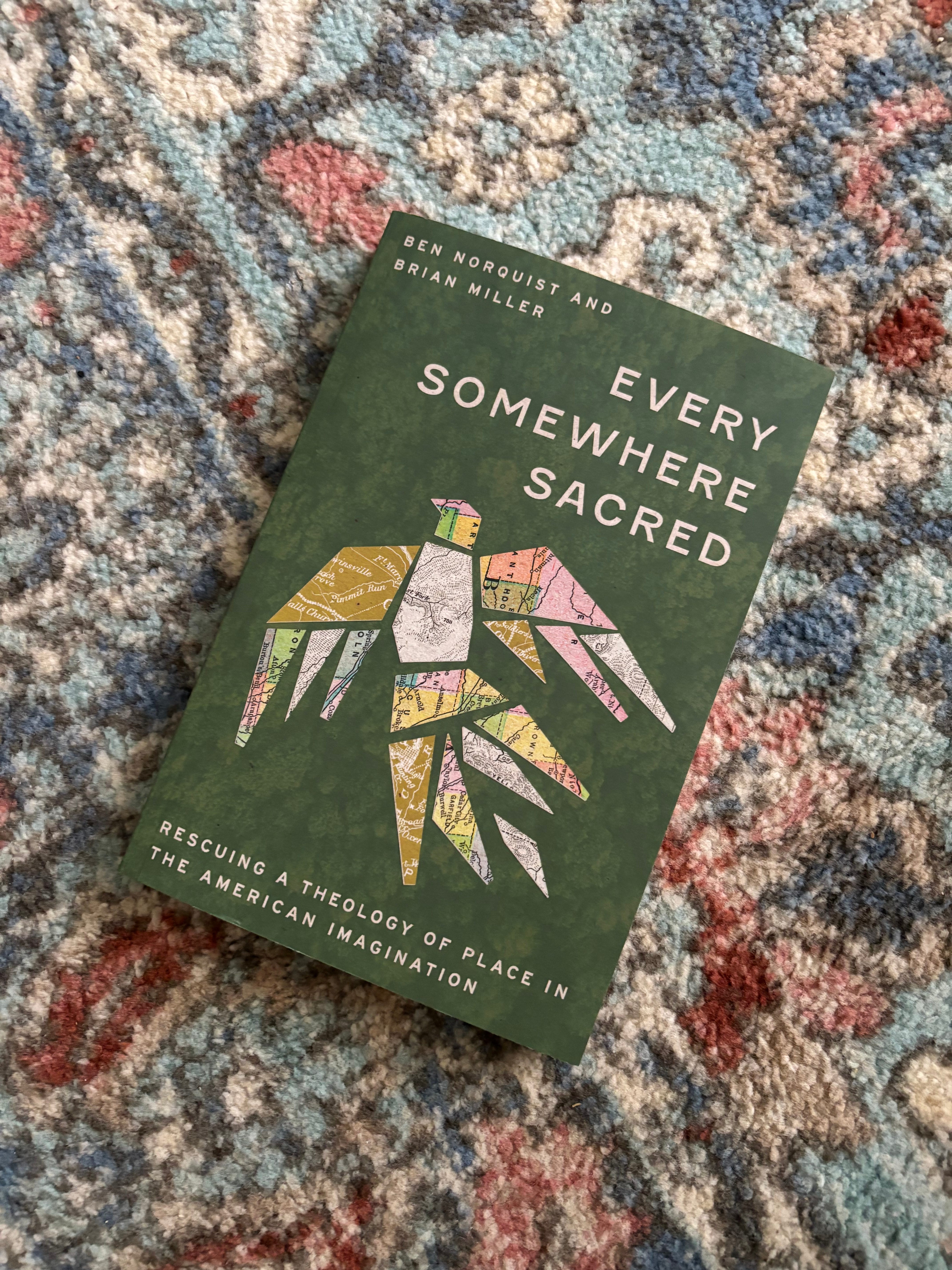
One of the books I’m really soaking in during this semiquincentennial season is this new offering from my friend Ben Norquist and Brian Miller entitled Every Somewhere Sacred: Rescuing a Theology of Place in the American Imagination. Ben and Brian challenge some of these national origin stories that sever us from place and from one another, exploring a better path forward for understanding where we are and thus who we are.
I’m also excited to share that I’ve published a piece in Plough Magazine entitled Down the Tunnels of Richland Creek that reflects on the hidden stories in my own hometown. America is made up of thousands and thousands of communities that are humming with forgotten histories.
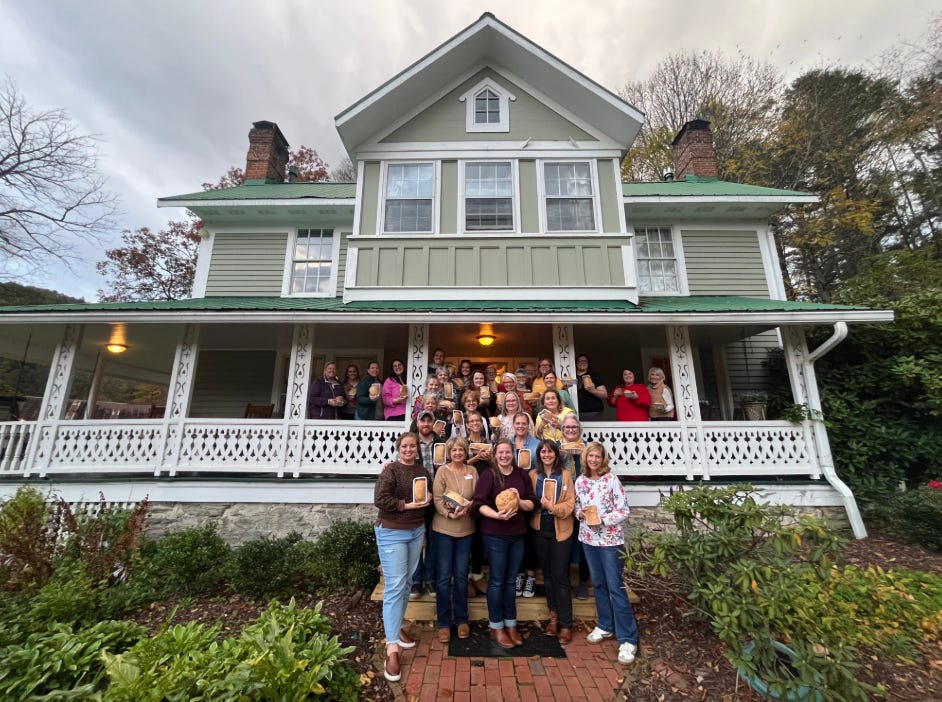
And finally, Kendall Vanderslice and I are eagerly anticipating our upcoming Bake and Pray retreat in Valle Crucis, North Carolina. The dates are October 18-20 (perfect timing if you are feeling a little stressed out about the November mid-terms and need a reminder of the greater story of hope to which you belong!)
Here’s the catch: we need to know if enough folks are interested in this retreat for us to move forward with planning. If you’ve been thinking about this event, now is the time to let us know! Head over the Kendall’s Substack to learn more!
Beautiful, well-articulated piece.
Thank you for the book recommendation. Really looking forward to that one!