
Should We Still Be Gracious?
On building bridges to nowhere and the best thing I did this week


There’s something I want to say right out of the gate. I know how it can come across when a privileged person like me starts to opine: “Why can’t we all just get along?”
Easy for me to say, right? I live in a system that has pretty much always worked for me. It isn’t my family being held in a detention facility. It isn’t my husband serving as a law enforcement officer. It isn’t my life that’s being threatened.
But, before you close out of this post, can you hang with me?
Like many of you, I’ve been watching the news, scrolling social media, and hearing from my community this week. In recent days, I have seen a very influential conservative Christian leader joke on X about wanting to shoot an ICE protester and I watched as her followers joked along with her in the comments. I’ve seen one of the most influential Evangelical leaders in America say that people who are protesting are simply pawns being used by some radical left agenda. I’ve heard a left-leaning acquaintance say that they think it would probably be best for us all if someone just “took out” the president. I’ve seen liberal friends post that silence in any form right now is an indication that you would have been complicit with Nazis during the Holocaust.
On television we saw images of ICE deploying tear gas near schools, and all I could think about was how frightening that must have been for those children! We’ve also seen videos of angry protestors storming into a church in St. Paul where families had gathered to worship, and still my thought remains: how frightening that must have been for those children!
Of course, everyone immediately took to social media to argue about whether or not those protestors were justified. That was the point when I realized that didn’t have it in me to even form an opinion. I was too weary to do anything but weep. There are no sanctuaries left, and no sacred spaces remain that have not been desecrated by our deafening discord. Our children’s tears are the evidence of our collective folly.
A little window into my inner world: When I lived in India, my host family had a secret nickname for me: The Diplomat. “You are always so careful about what you say,” my friend Karleen told me when she finally revealed the moniker. She complimented me for always figuring out how to talk to both sides (and kindly added that I could do without so many disclaimers and caveats).
It’s an impulse that I think I’ve always had (though I have yet to identify the defining childhood moment that made me this way). On my worst days, I do it because I hate conflict…because I want people to like me. On my best days, I do it because I truly want to build bridges of understanding and unity. I suppose it’s the difference between peace keeping and peace making.
But right now, I have no idea how to build bridges. The chasms in this country feel a thousand miles wide. I’ve heard people say, “how do you find common ground with people who __________!?” (they list some unforgiveable sin). Still others say, “how can you build a bridge to nowhere?”
I want to be clear: I’ve made my thoughts known about this current administration, that I think many of these policies are dangerous and immoral. It’s not the algorithm that’s swaying my opinion. I have so many friends whose lives have been devastated by these cruel policies - from the abrupt dismantling of humanitarian aid, to the imprisonment of lawfully present immigrant family members, to the interruption of adoptions through the suspension of visa processing.
And though I’ve said all these things, the criticism I get most often online (from both sides) is something to this effect: “You aren’t angry enough!” And because, in reality, I’m quite angry, I can only take that to mean: “You aren’t being mean enough!”
When I was a little girl, my dad and I would always watch the movie Ben-Hur at Easter time when it was broadcast on television. If you aren’t familiar with the premise, the protagonist is a young, first-century Jewish man (Judah Ben-Hur) living during the time of Jesus who is betrayed by his Roman friend Messala. Judah is falsely accused, sent off to be enslaved, and his mother and sister are condemned to prison where (spoiler alert) they eventually contract leprosy. The entire movie follows Judah’s journey of vengeance, a retributive wrath that is only interrupted by the compassionate pleading of his long-suffering companion Esther…and the words of a young Rabbi named Jesus.
There’s a poignant scene where Judah has decided to begin a (justifiable) uprising against his Roman conquerors. But Esther pleads with him to put his rage (right though it may be) to rest. She says: “There is a law in life that blood begets more blood as dog begets dog. Death generates death, as the vulture breeds the vulture. You seem to be now the very thing you set out to destroy, giving evil for evil. Hatred is turning you to stone.”
Esther is right. Rage is generative. And there is indeed a law in life that says whenever I belittle, despise and dehumanize my neighbor (or enemy), I lose a part of my own humanity. At some point I have to choose not to be complicit in my own dehumanization. I will not participate in it. Nor will I give the treasure of my attention to a rage economy driven by algorithms that only profit men who are already rich and already powerful. I will not allow them to rob me of the grace I know I am called to.
By grace, I don’t mean capitulation to injustice or passivity at the expense of the oppressed. Jesus, (whose entire mission was predicated on the love and grace of God) turned over the tables of the money changers in the temple and had some pretty choice words for corrupt religious leaders. He broke laws in the name of love, healing on the Sabbath and touching lepers. Grace and justice are not mutually exclusive.
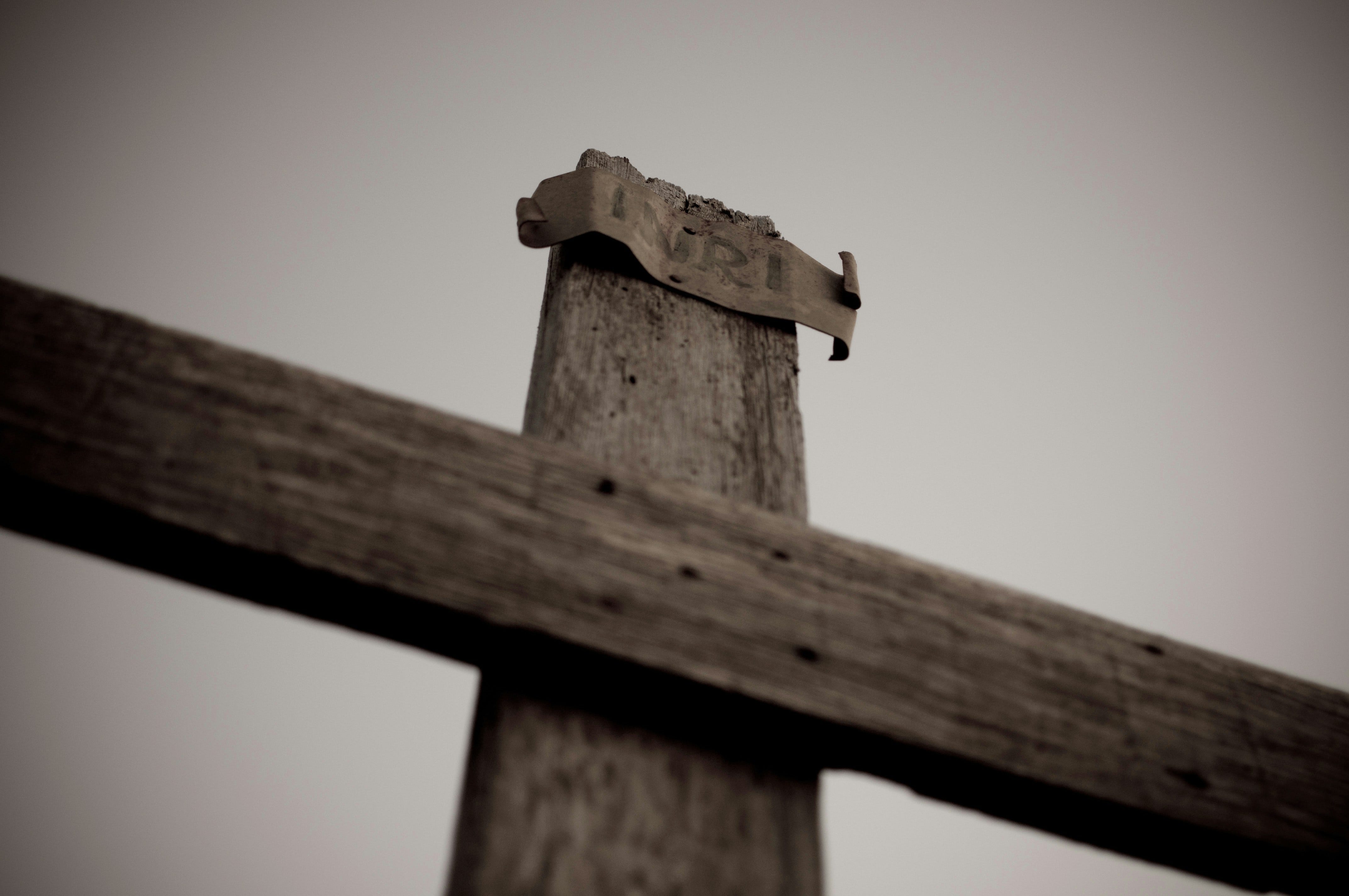
At some point, I have to take seriously the command to love my actual enemy, just a Jesus did. One of the last things He uttered on the cross was a prayer for the people who were quite literally putting Him to death: “Father, forgive them, for they know not what they do.” My whole religion is based on the stunning reality that even when I was an enemy of God, lost in my brokenness and need, God took me in as a child of His own, forgave me, and called me beloved. Who am I to withhold grace, or deem anyone beyond that kind of love, that kind of redemption?
There is a place for rage in the work of justice (if you follow my writings, you know that I love a wild, unhinged, prophetic wail of lament!!) But lately I’ve been asking myself the question: Is “F*** ICE!” really getting us anywhere? Is “F*** around and find out!” really changing anyone’s mind? We need to commit ourselves to more articulate rebuttals than this wrath-filled quips.
And if there is a place for rage in the work of justice, is there not also a place for grace? Grace is, yes, virtuous…but it is also practical and pragmatic. By choosing to remain in relationship and in conversation with someone with whom you vehemently disagree, you maintain hope for change, for deeper understanding. I’m not saying that we compromise our values or reject healthy boundaries (if you aren’t safe in a relationship, you should leave). What I am saying is, if by grace and by courage, we can keep the conversation going with someone on the other side, we may learn something to help us chart a way forward.

I’ve heard it said that after World War II, the enemies of America admitted that our great nation would only fall if it was divided from within. I’ve also read some scary reports that our current geopolitical enemies are actively engaged in our social media feeds, sowing seeds of disinformation meant to divide us. I mean it when I say that our inability to talk to each other has become an existential threat. There is no “us” versus “them.” There is only us. We rise and fall together. We must find a way to keep talking. Or as Ezra Klein said recently, “We are going to have to live here with each other.”
And talking (to actual humans) was the best thing I did this week. Our church opened up a space on Monday morning for people to come and pray and process together over coffee. We are a small church, and the conversation was informal…no script. But these were essentially the four questions we tackled:
How are you processing this political moment? How is it feeling in your heart, your head, and your body?
What experiences have you had that have influenced the way you are feeling?
What does it look like to show up as a faithful witness of Christ in this moment in our community?
How are you staying grounded in Christ’s kingdom (and keeping your nervous system regulated!) right now?
The conversation was a balm. It was hard. We cried with those at the table who had suffered the most significant consequences of recent policy changes. We noted some of our differences. We resolved to take things a day at a time, one act of change or service at a time. We talked about Scriptures that were speaking powerfully to us. We spoke directly about the things that were unjust and unfair. We laughed and lamented and looked each other in the eye. (So much better than doomscrolling). With every minute that passed, I found my body relaxing, my heart and mind releasing the anxiety that had had such a hold on me all week.
And so, hope was reborn in me this week. My community was my bridge to hope.
AND NOW FOR SOME PROVISIONS:

Our friends at World Relief Triad are in need of some provisions. They have made us aware of some new and pressing needs in the refugee community due to the government's launch of Operation Post Admission Refugee Reverification and Integrity Strengthening (or PARRIS). Essentially, refugees who have been previously (and thoroughly) vetted and invited to begin a new life in the US are now at risk of detainment if they have not yet received their Green Cards. World Relief knows of legal refugee families in Minnesota who have been detained. They are asking for partner churches to learn more about Operation PARRIS, pray for at-risk refugee families, and advocate for these refugee communities with your legislators. There is also an opportunity for you to give financially as they seek to provide legal services and resources to impacted families.
One provision that’s helping me navigate all this is a podcast called Left, Right, Center. It has 3 journalists (whose backgrounds span the political spectrum) analyze the news and offer their take. I think it’s important right now to understand how people of different political persuasions are processing things, and this podcast is a concise and simple way to do this.
And finally…stew. Our region is about to get slammed by a huge snow-storm, so we’ll be eating our fair share of hearty, warm stews. This potato sausage stew from Fascinating Recipes has been our favorite this season. It’s really easy and affordable to make (a few notes, I added a red pepper and did NOT skimp on the dill and it was delicious!)
I really treasure your writing because it says so much of what I often think.
I have thought a lot in the last year about the story of the man who stood outside the White House during the Vietnam war repeatedly and he was asked why he continued standing there because he wasn't really changing anything with just his one little sign. And he said something along the lines of how I don't do it to change the country but I do it so the country doesn't change me. Sometimes I wonder why I'm not out protesting in the streets and why I'm not more vocal and why I'm not more angry ( and I think there is a place for all of those things).
But I realize that for me the ways in which I can volunteer in my community and get involved with encouraging people to get out and vote and make muffins for my neighbors and stay engaged in my community even when I know that people disagree with me politically, those are the things that allow me to hold on to my humanity. It helps me remember that the people around me are also human beings and that what matters most to me is not changing their minds but treating them with respect and loving them well.
It's such a fine line to walk, when solidarity with the oppressed looks like grieving with our neighbor (including anger) and when diplomacy and any hope of progress depends on finding common ground and patient communication with the oppressor and those enabling/empowering them. It's not helpful to scream slogans and dehumanize along with either side, and also not helpful for us to become Dr. King's "white moderates" that would prolong suffering and injustice to avoid conflicts or to risk our standing with the power-holding oppressors. It's also so hard to discern what's other's solidarity, allyship, and advocacy vs aiding the harm by refusing to grieve, risk, and experience vulnerability as a function of privilege or fragility. It's impossible to know what any one person is doing behind the scenes and also there is a lot of fear driving that anger: fear that more people we trusted are going to fall under the spell, that "safe" people will betray us, that more and more voters will be swayed to compromise on our rights and dignity. You're right, all of this is right, and also I think the skills you've taught us about communal grieving are vital. Neither revenge nor passive resignation, neither trying to burn it all down through civil war nor trying to save our own skin through cozying up to a death cult. It's very very difficult to do, and even harder to communicate.